What Is Inflation? What Causes It? (HISTORY OF MONEY!) (#28)
What Is Inflation? What Causes It? (A Brief History of Money)
What Is Inflation?
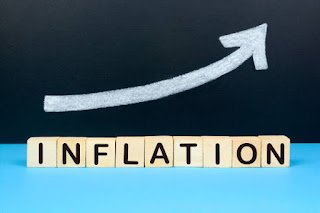
Inflation is the economic phenomenon where the value of money decreases over time, as the cost of living rises — meaning the same amount of money buys progressively less than it used to.
A Brief History of Money
To understand inflation, it helps to understand where money itself came from. This is the popular, commonly-told version of that story — worth noting upfront that economists and anthropologists actually debate how literally accurate parts of it are, particularly the idea that a formal barter system was the direct historical precursor to money everywhere. Some researchers argue early economies more often ran on credit and informal debt tracking rather than literal one-for-one barter. That said, the broader arc — from physical commodities, to coinage, to paper money — captures something real about how monetary systems evolved.
The Barter System: the earliest widely-discussed method of exchange, where goods were traded directly for other goods — someone with a bag of rice trading it for a pair of shoes, for example. The obvious problem: it required finding someone who both had what you wanted and wanted exactly what you had to offer. Not exactly efficient.
Gold & Silver Coins: these solved the barter matching problem, since coins could be exchanged for anything, rather than needing a direct trade of goods. The catch: coins were heavy and impractical to carry around in any real quantity.
Paper Money: this is where a widely-told (if simplified) story comes in. According to this popular account, people began depositing their gold and silver coins with early goldsmith-bankers, receiving a paper receipt in return — representing the value of what they’d deposited. Over time, people started trading these receipts directly instead of retrieving the underlying coins, since the receipts were far easier to carry and just as trusted. This is often cited as an early precursor to modern banking, though it’s a simplified version of a much longer, more complex history of financial institutions.
Why Does Paper Money Cause Inflation?
Here’s the core issue: unlike gold or silver, paper money has no inherent physical value. Its value exists purely because people collectively believe in it — a system economists call fiat currency, meaning its value is backed by government decree and public trust, not a physical commodity.
→ Related: What Is Fiat Currency?(#71)
Because paper money isn’t tied to a fixed physical resource, it can be printed in essentially unlimited quantities by the institutions authorized to do so (central banks and governments). And that’s precisely where inflation risk comes from: when more money is printed without a corresponding increase in actual goods and services in the economy, each unit of that currency ends up representing a smaller slice of real value — prices rise, and purchasing power falls.
What Causes Inflation?
A few of the core drivers:
- Money supply growth — when significantly more currency is printed or issued without matching growth in real economic output, each unit of currency is worth relatively less.
- Government policy — monetary and fiscal decisions (interest rates, government spending) directly influence inflation.
- Supply and demand — this applies to money itself, not just goods. Just as too much supply of any product relative to demand pushes its price down, an oversupply of money relative to demand for it reduces its value — and the same demand/supply logic applies to prices of goods more broadly, driving inflation (or its opposite, deflation) from that angle too.
There are certainly more contributing factors beyond these — this covers some of the core ones.
That covers the basics of what inflation is, a simplified look at where money itself came from, and the core forces that drive inflation. Thanks for reading.